Are Embroidered Uniforms Durable for Daily Work?
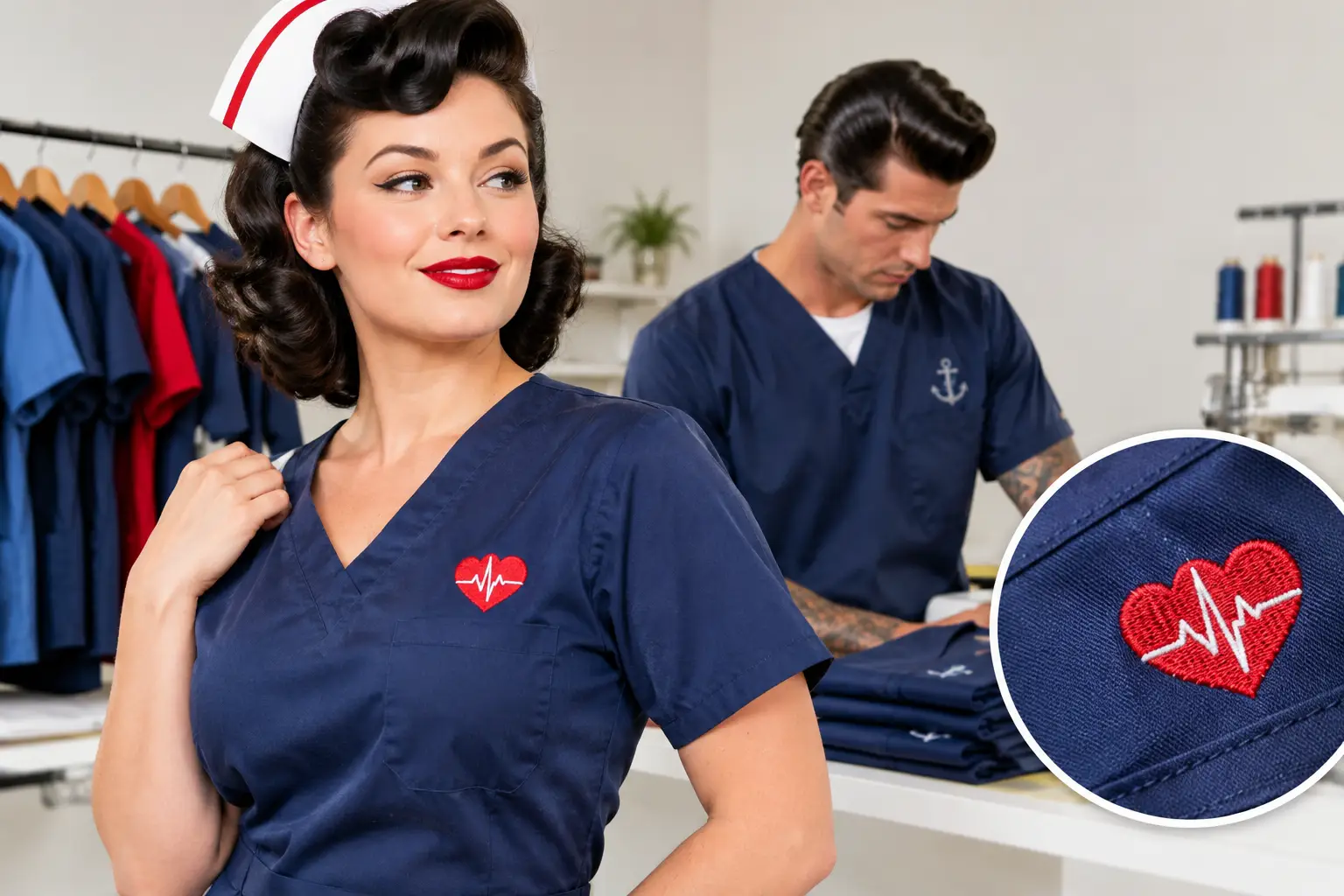
Are embroidered uniforms durable? See how thread, backing, garment choice, and wash habits affect the long-term performance of professional workwear daily.
A clinic jacket gets pulled on before the first patient arrives, tossed over a chair between appointments, washed after a long week, and worn again. A work polo may see heat, dust, lifting, and repeated laundering. That is the real test behind the question: are embroidered uniforms durable? When the garment, thread, design, and care routine are right, embroidery is among the longest-lasting ways to identify a professional team.
Unlike a surface print, embroidery is stitched directly into the garment with thousands of interlocking thread stitches. It does not simply sit on top of the fabric waiting to crack or peel. Still, “embroidered” is not an automatic promise of a uniform that lasts forever. Quality materials and proper production determine whether a logo stays sharp or starts looking tired before the garment itself is done.
Are Embroidered Uniforms Durable? Usually, Yes
Well-made custom embroidery is built for repeated wear and laundering. Quality polyester embroidery thread holds color well, resists shrinking, and stands up to normal washing better than many decorative finishes. The stitching becomes part of the garment, which is why embroidered names, credentials, and logos remain a trusted choice for medical practices, dental offices, school staff, barns, hospitality teams, and trades.
The trade-off is that embroidery adds structure. A dense logo feels more substantial than a print, and on lightweight fabric it can create a little stiffness or pull if it is not properly supported. That is not a reason to avoid it. It is a reason to match the artwork and garment to the job.
A left-chest logo on a premium polo, vest, scrub jacket, or work jacket is a particularly durable combination. These garments have enough body to support clean stitching without compromising comfort. For teams that need apparel to look polished through a demanding schedule, that finish earns its place.
What Makes Embroidery Last
Durability comes from a system, not a single feature. Thread quality matters, but so do digitizing, backing, fabric selection, and the way a uniform is washed after it leaves the embroidery studio.
Thread That Holds Its Color and Shape
Commercial polyester thread is the workhorse for custom uniforms. It is selected for strength, colorfastness, and resistance to the bleach exposure, moisture, sunlight, and frequent washing that can come with professional use. A rich navy credential or a bright logo color should remain recognizable after many cycles, not fade into a vague suggestion of the original design.
Thread can eventually show wear, particularly on garments exposed to industrial laundering, harsh chemicals, or repeated abrasion from straps and equipment. But under ordinary workplace conditions, quality thread generally outlasts the garment’s crisp, new appearance.
Clean Digitizing, Not Just a Good Logo File
A logo must be digitized before it can be embroidered. This converts artwork into stitch instructions that tell the machine where, when, and how to sew. It is technical work, not a simple file conversion.
Poor digitizing can create gaps, bunched thread, uneven curves, or excessive stitch density. It may also pull the fabric around the design. Good digitizing accounts for small lettering, fine details, fabric type, stitch direction, and compensation for the slight movement that occurs during stitching. That planning protects both the logo’s appearance and the fabric beneath it.
For professional uniforms, small details deserve special attention. Credentials, department names, and compact logo elements may need a simplified version to remain readable and durable at embroidery scale. A design that looks impressive on a screen is not always the right design for a 3-inch left-chest placement.
Proper Backing and Stabilization
Backing is the support material placed behind the fabric during embroidery. It helps prevent shifting, puckering, stretching, and distortion while the design is stitched. Once the work is complete, the backing is trimmed or torn away according to the garment and application.
This behind-the-scenes component has a major effect on longevity. Stretchy performance polos, lightweight scrub jackets, fleece, and softshell garments each behave differently under a needle. The right stabilization keeps a logo flat and secure without making the finished piece feel unnecessarily heavy.
The Right Garment for the Assignment
An embroidered uniform cannot outlast a weak garment. Thin fabric, loose seams, poor construction, or a finish that breaks down in the wash will shorten the useful life of any decorated piece.
For patient-facing teams, structured polos, jackets, vests, and button-downs offer a professional canvas for embroidery. For trades, facilities crews, and outdoor teams, heavier work shirts, durable outerwear, and layers that accommodate movement are often the better call. In equestrian settings, a vest or jacket may protect the embroidered area from more daily friction than a lightweight shirt.
At Corazón De Oro Apparel, custom embroidery is approached as a finished professional uniform, not an afterthought applied to generic promotional merchandise. The best result starts with choosing a garment that suits the environment, then building the decoration around it.
The Factors That Can Shorten Its Life
Even excellent embroidery has limits. The most common problem is not that stitches suddenly fail. More often, the fabric around the design fades, thins, snags, or loses its shape first.
Frequent high-heat drying can be tough on both garment fibers and thread. Chlorine bleach may affect color, especially on darker garments. Heavy abrasion from seat belts, tool harnesses, lanyards, backpacks, or repeated contact with counters can gradually roughen raised stitching. A snag should be addressed promptly rather than pulled, because tugging one loose thread can distort a portion of the design.
Dense embroidery can also be less suitable for ultra-lightweight or highly stretchy fabrics. A large, heavily filled logo may feel stiff and can cause visible pulling as the garment moves. In those cases, a smaller placement, simplified art, or a different garment style usually gives the team a better long-term uniform.
How to Care for Embroidered Uniforms
A few practical habits preserve the garment and the embroidery without turning laundry into another shift task. Turn uniforms inside out before washing to reduce friction on the stitched area. Use cold or warm water, a mild detergent, and a normal cycle unless the garment label says otherwise.
Avoid chlorine bleach directly on embroidered areas. If stain treatment is necessary, test it on an inconspicuous spot first and follow the garment care instructions. Air drying is gentler, while a low-heat dryer setting is the safer choice when time is short.
Do not iron directly over embroidery. If the garment needs pressing, turn it inside out or place a pressing cloth between the iron and the stitched design. This prevents the thread from flattening, shining, or melting under excessive heat.
For uniforms that see demanding use, it helps to issue more than one piece per employee. Rotating two or three embroidered polos, jackets, or work shirts reduces washing frequency per garment and keeps the whole team looking consistent when one item is in the laundry.
Embroidery Compared With Printed Uniforms
Printed uniforms have their place, especially for large artwork, full-color graphics, or lightweight promotional apparel. However, prints are surface applications. Depending on the method, they can crack, peel, fade, or feel less refined with repeated wear.
Embroidery is usually the stronger choice for a professional logo, name, department, or credential. It offers texture, dimension, and a more established finish. It also communicates that the garment was selected for the person wearing it, not handed out as an afterthought.
That does not mean embroidery wins every decision. A detailed photo-realistic logo with gradients may reproduce better in print, while a simple mark with clear lines often looks excellent in thread. The most durable option is the one that respects the artwork, the fabric, and the way the uniform will actually be used.
A Durable Uniform Is a Better First Impression
An embroidered logo should still look intentional after the new-hire photo, the busy season, and plenty of ordinary workdays. That level of durability comes from disciplined choices: a quality garment, professional digitizing, stable stitching, and care that does not punish the fabric.
For the professional, a uniform is more than a shirt with a name on it. Choose embroidery that is made to keep its shape, hold its color, and represent the team with the same pride on its hundredth wear as its first.