Embroidered Workwear That Looks Professional
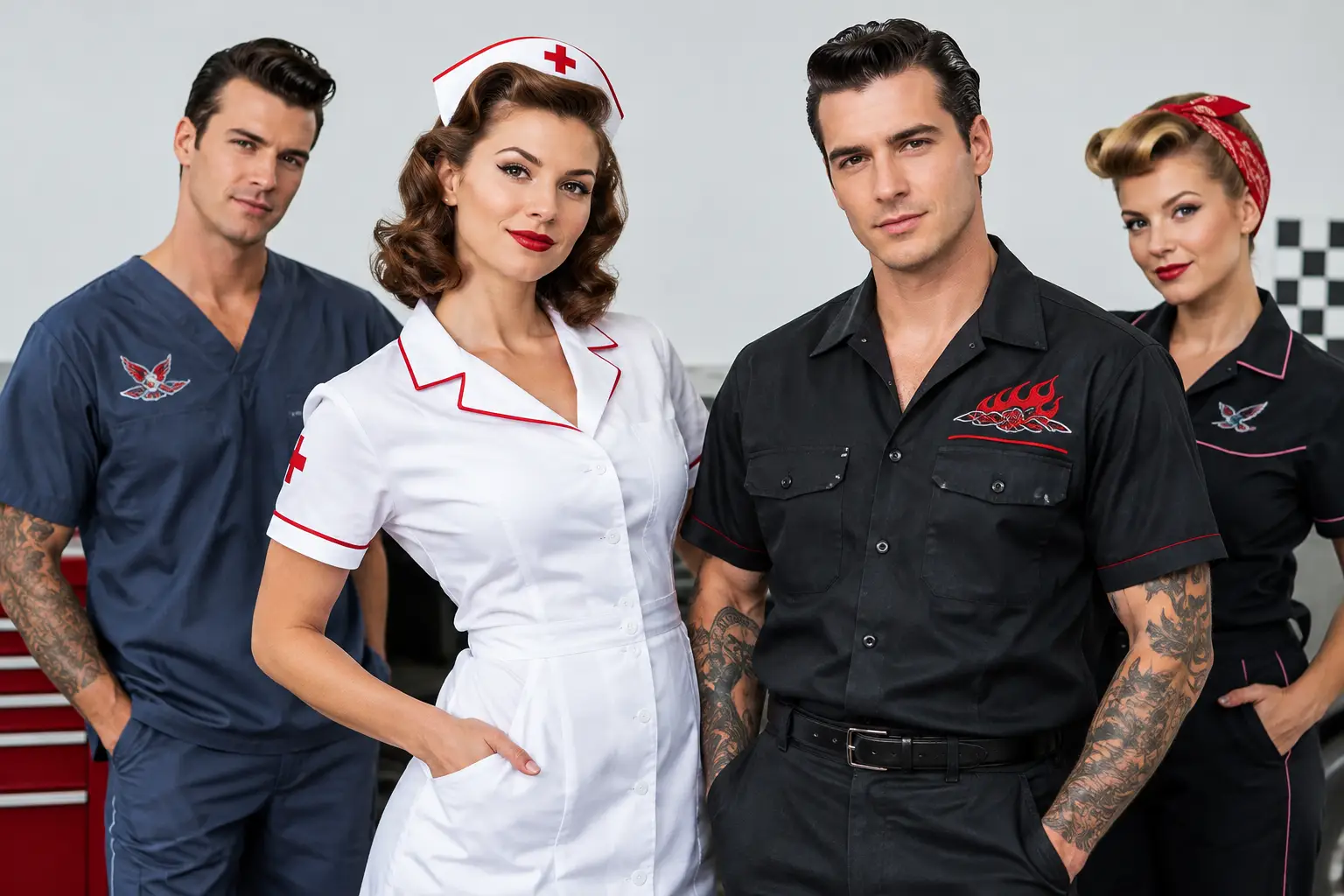
Choose embroidered workwear that holds up through real shifts, presents your team professionally, and makes names, credentials, and logos easy to read.
A jacket with a crooked logo or a name that disappears into the fabric does not read as a small detail. To a patient, client, parent, customer, or barn guest, it can make an otherwise capable team look improvised. Quality embroidered workwear does the opposite: it gives people a clear, consistent way to recognize who they are working with and what they represent.
For medical offices, EMS units, veterinary clinics, school staff, trades, hospitality teams, and equestrian barns, the goal is not to turn every employee into a billboard. It is to create apparel that works hard, wears well, and looks like it belongs to a professional organization.
What embroidered workwear needs to do
The best workwear earns its place in the daily rotation. It should be comfortable enough for a long shift, durable enough for repeat washing, and polished enough to wear in front of the people who trust your team. That balance matters more than a flashy garment or the lowest possible unit price.
Embroidery is especially well suited to garments that need a lasting, elevated finish. Thread has texture and dimension. It holds its shape better than many surface-print methods on outerwear, polos, vests, and heavier uniforms. A properly digitized logo and clean stitching can make a familiar garment feel intentional rather than promotional.
There is a trade-off, of course. Embroidery is not the right choice for every design. Fine gradients, photographic artwork, and tiny type may need to be simplified before they can stitch cleanly. A good embroidery process respects the limits of thread instead of forcing a complicated graphic into a format that will not read from three feet away.
Start with the job, not the logo
Before selecting a garment, consider where and how your staff will use it. The needs of a dental practice differ from those of a construction crew, and an equestrian show team has different priorities than a front-desk staff.
A clinic team may need lightweight zip jackets that can move between cool exam rooms and warmer outdoor commutes. EMS personnel may prefer layers that fit comfortably over uniforms without bunching at the shoulders. A service company working outdoors may need insulated vests or jackets that keep the core warm while leaving arms free for physical work. For barns, durable outerwear that handles dust, weather, and active movement is often a better choice than a thin fashion layer.
Think through the full workday. Will employees wear the piece over scrubs? Is it likely to be washed weekly? Does it need pockets for pens, phones, or gloves? Is it part of a uniform expectation, or a polished optional layer for cooler days? These answers narrow the field quickly.
Garment weight and fabric matter
A heavyweight jacket may look substantial, but it can be too warm for indoor staff. A lightweight performance polo may feel great, but very thin or stretchy fabric can show puckering if the embroidery is too dense. Fleece, soft shell, twill, pique polo fabric, and structured work shirts are often dependable choices because they offer enough stability for clean stitching.
Color deserves the same attention. Navy, black, charcoal, and deep green create a professional foundation and tend to hide the realities of a working day. Lighter garments can feel fresh and approachable, particularly in wellness, pediatrics, hospitality, or school settings, but they require more consideration around stains and thread contrast.
Make names, credentials, and logos readable
Embroidery has a practical job: identification. If a patient is trying to locate the charge nurse, or a client needs to know who arrived at their property, the information should be easy to read without a close inspection.
For most teams, the left chest remains the strongest placement for a logo, name, or credential. It is familiar, visible in conversation, and works across jackets, polos, button-downs, and vests. A logo on one side paired with a name and credential on the other can also work well when both elements have enough room to breathe.
Avoid shrinking important text to include every detail. Long department names, multiple credentials, addresses, taglines, and phone numbers may all be valuable elsewhere, but a chest embroidery area is not a business card. Keep the hierarchy clear: organization first, then name or role where needed.
Thread color is not a decorative afterthought. High contrast usually wins for readability, especially in clinical and service environments. White or light gray thread stands out on dark garments. Navy, black, or deep colors can look sharp on lighter fabrics. Tone-on-tone embroidery can be refined for executive outerwear or premium client-facing apparel, but it is less useful when rapid identification is the priority.
Keep the logo true to its best form
Not every file translates equally well to embroidery. A clean vector logo is ideal, but an experienced embroidery provider can review the artwork and determine what needs adjustment. Tiny spaces may close up, thin lines may need reinforcement, and small lettering may need to be enlarged or removed.
This is where digitizing matters. Digitizing is the process of converting artwork into stitch instructions for an embroidery machine. It is not a one-click export. Stitch direction, density, underlay, and sequence all affect how the finished logo lies on the garment. Good digitizing keeps lettering crisp and prevents a design from becoming stiff, distorted, or overly heavy.
Build consistency without making every piece identical
A coordinated team does not require every person to wear the exact same garment. In fact, forcing one style on every role can lead to apparel that stays in a closet because it does not suit the work.
A stronger approach is to establish a small, cohesive uniform system. Your practice logo, approved thread colors, and placement stay consistent. Then employees can choose from approved polos, vests, zip jackets, or insulated outerwear based on their role and environment. The front desk may prefer polished polos and cardigans, while field staff choose durable layers that accommodate movement and weather.
This also makes reordering easier. New hires can receive the same logo treatment months later, even if they select a different approved garment. The team still looks connected, not copy-pasted.
For smaller groups, this approach is especially useful. You do not need a massive order to create visible standards. A five-person veterinary office, a school department, or a mobile service crew can look just as organized as a larger operation when the pieces are selected with purpose.
Plan the order before the busy season
Workwear orders tend to become urgent at the least convenient time: before a grand opening, during a staffing expansion, ahead of cold weather, or just before a conference or community event. Giving the process a little lead time protects the quality of the final result.
Confirm garment styles, colors, sizing, logo placement, thread colors, names, and credentials before production begins. If several people are approving the order, assign one point person to collect final spelling and size information. A misspelled credential or an unconfirmed size is not a design problem, but it can still delay the team.
It also helps to order with the next few months in mind. If turnover or seasonal hiring is common, consider adding a small number of unpersonalized logo pieces for future staff. Personalize names when the role calls for it, but keep core branded apparel available for quick onboarding.
Care is part of the professional finish
Even premium embroidery needs reasonable care. Turn garments inside out before washing when possible, use cold or warm water according to the garment label, and avoid harsh bleach directly on embroidered areas. High heat can be hard on some technical fabrics and may affect the backing that supports the stitches.
For embroidered jackets and polos, skip the temptation to iron directly over the design. If touch-up ironing is needed, use a cloth between the iron and the embroidery. These small habits help thread stay smooth and colors stay true through repeated wear.
Professional apparel should not feel precious. It should be ready for early rounds, muddy job sites, long school days, barn chores, front-desk handoffs, and the occasional coffee that never had a chance. Choose embroidered workwear with that real life in mind. The finished piece should carry your name, your standards, and enough Heart of Gold to make people proud to put it on.