Outfitting Mobile Crews Without Cutting Corners
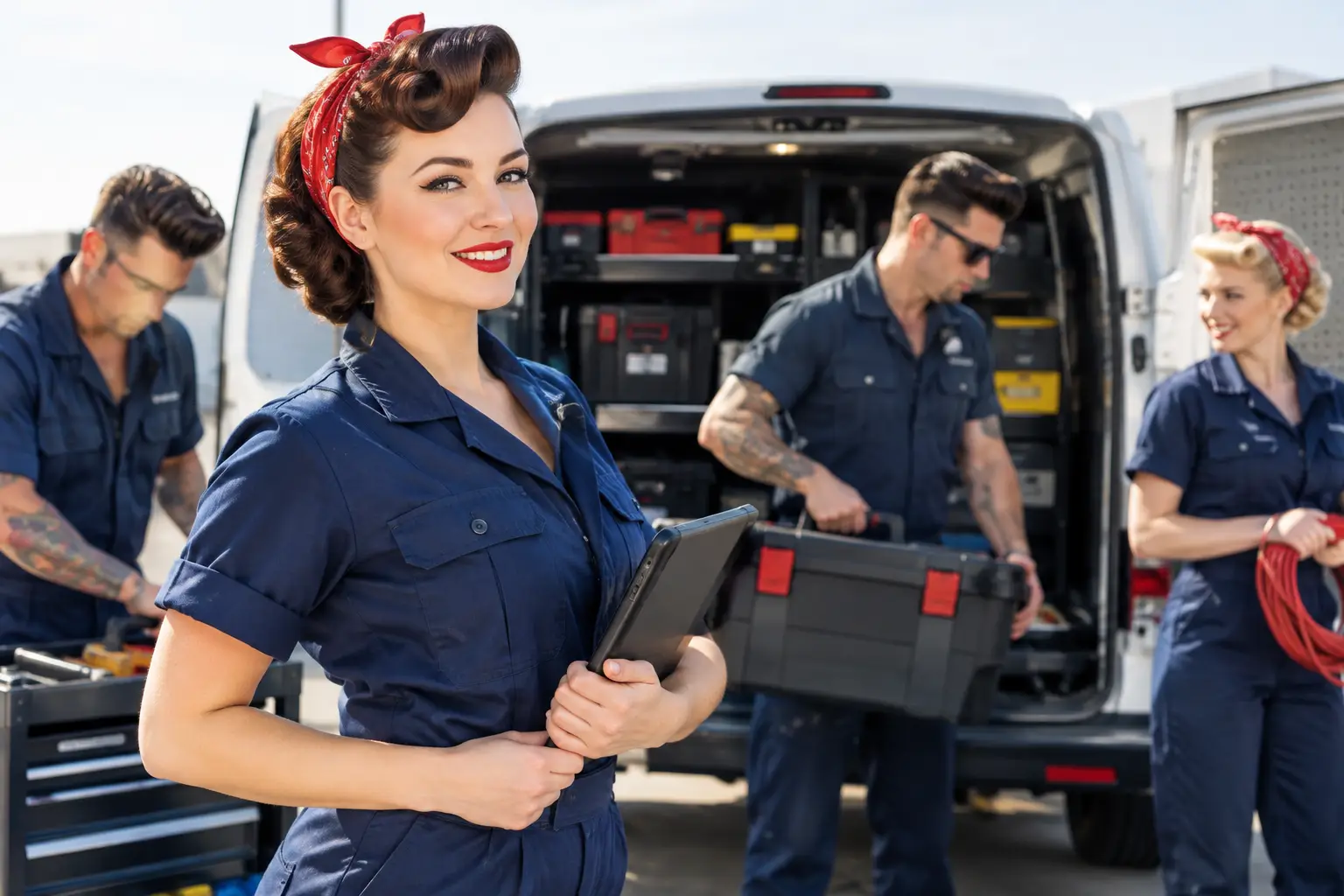
Outfitting mobile crews with premium embroidered apparel that holds up on the road, keeps teams recognizable, and presents a credible, professional image.
A crew that works from a truck, jobsite, barn aisle, clinic vehicle, or event setup has a different uniform problem than a team behind one front desk. Outfitting mobile crews means choosing apparel that can handle movement, changing weather, public-facing work, and repeat washing while still making every person easy to recognize. The goal is not to turn your team into a walking billboard. It is to give them gear that works as hard as they do.
For EMS units, mobile veterinary teams, home health providers, tradespeople, equestrian staff, facilities teams, and field service professionals, what employees wear is part of the job. It affects comfort, safety, first impressions, and the confidence a customer or patient feels when the right person arrives.
Start with the work, not the logo
A logo matters, but it should come after the real-world requirements. Before selecting a polo, jacket, vest, or uniform layer, consider where the crew spends its day. Is the work mostly outdoors? Are team members lifting equipment, driving between calls, entering client homes, working around animals, or moving from cold treatment rooms to summer heat?
That context determines the garment. A lightweight performance polo can be right for a service team in warm weather. A durable embroidered vest may make more sense for staff who need a professional outer layer without the bulk of a full jacket. For crews exposed to wind, rain, or early-morning calls, a structured jacket is often the piece employees reach for first.
One garment rarely solves every condition. A practical uniform program often begins with a core shirt or polo, then adds outerwear for seasonal use. That approach keeps the team visually consistent without asking people to wear the same layer in every temperature.
Choose fabrics that earn their place
Mobile work is hard on apparel. Garments spend time against vehicle seats, tool belts, equipment straps, animal hair, cleaning supplies, and whatever else the day decides to throw at them. Fabric choice is not a minor detail.
For active crews, look for materials that hold their shape after repeated laundering and allow comfortable movement through the shoulders and arms. Moisture-wicking performance fabrics are useful when the job involves heat, physical exertion, or long stretches outdoors. Cotton-rich pieces can feel familiar and comfortable, but may be less forgiving when the shift gets sweaty or the garment needs to dry quickly.
Outerwear deserves the same scrutiny. A jacket that looks polished on day one but pills, sags, or loses structure after a season does not represent a premium operation. Well-chosen workwear should look intentional at the start of the day and still look respectable when the last call runs late.
There is a trade-off. The lightest garment is not always the most durable, and the warmest option is not always best for a crew that is constantly in and out of vehicles. Build around the conditions your team faces most often, then use optional layers to cover the exceptions.
Make identification immediate and professional
When someone arrives at a home, school, barn, jobsite, or business, people want to know who they are dealing with. Clear custom embroidery gives mobile crews a polished answer before introductions begin.
A company logo establishes the organization. A first name makes the interaction more personal. Credentials, titles, or department identifiers can add useful context for healthcare, dental, veterinary, and specialty teams. The right combination depends on the work. A paramedic, technician, therapist, field supervisor, and installer may all need different information displayed, even if they work under the same brand.
Placement should be deliberate. Left-chest embroidery is a classic choice because it is familiar, readable, and professional. A larger back logo can improve visibility for crews working outdoors or around a site, but it is not necessary for every role. If the team meets clients face-to-face in quieter settings, restrained chest embroidery may be the stronger choice.
Thread color matters, too. High contrast improves legibility, but contrast does not have to mean loud. A clean tonal mark on a premium jacket can look sharp when the logo design is simple. If the logo contains fine details, small text, or several colors, simplify it before stitching. Embroidery rewards clarity.
Build a uniform system, not a one-time order
The best mobile crew apparel programs are easy to maintain. New hires should be able to receive the same approved garments, logo placement, and thread colors as the rest of the team. Seasonal additions should fit the existing look rather than starting over with a different style every year.
This is where a short set of standards saves time later. Define the approved garment colors, the logo version, placement, name format, and which roles receive credentials or department wording. A two-page reference is enough for most organizations. The point is not bureaucracy. It is preventing the familiar slow drift into mismatched polos, outdated logos, and three shades of “company blue.”
Consider which pieces are required and which are optional. A required polo creates consistency on standard service days. An optional embroidered jacket or vest gives employees a useful upgrade for weather and travel. Offering a few approved choices can improve adoption, especially when your crew has different body types, climates, and job duties.
Fit is an operational detail
Apparel that restricts movement will be left in a locker, regardless of how good the embroidery looks. Mobile professionals bend, reach, carry, sit, climb, and drive. Fit has to support that reality.
Whenever possible, collect sizing before placing the full order rather than guessing from a generic size run. Ask employees whether they will wear the piece over scrubs, a base layer, or regular work clothes. Outerwear that fits perfectly over a T-shirt may be too tight over a uniform top. A vest intended for horse-barn staff may need extra ease through the shoulders. Small decisions at the sizing stage prevent expensive replacements later.
It is also worth thinking about pockets. They are valuable when they serve the job, such as holding gloves, a phone, a small notebook, or access credentials. Too many pockets can add bulk and create a less refined appearance. As with decoration, utility should lead.
Plan for turnover, growth, and real life
A crew order should not be treated as a fixed headcount forever. People join, change roles, move to another department, or need a replacement after a particularly unforgiving week in the field. Keep the artwork and embroidery specifications organized so reorders stay consistent.
For larger teams, ordering a modest number of unassigned garments in common sizes can help you outfit new employees quickly. This works especially well for core pieces such as polos or jackets with a logo only. Names and credentials can be added as needed, avoiding a shelf full of apparel assigned to people who no longer work there.
Budgeting also benefits from separating essentials from nice-to-haves. Start with the garments employees need to do their jobs and represent the organization well. Add premium outerwear, seasonal layers, or gift pieces when the timing is right. A thoughtful program can grow in stages without looking pieced together.
Let quality carry the message
For a mobile crew, branded apparel is often the first physical signal of your standards. It tells a homeowner that the technician at the door belongs there. It helps a patient identify the right clinician. It gives a barn client confidence that the person handling their horse is part of a prepared team.
That signal is strongest when the clothing is genuinely useful. Premium custom embroidery on a durable, properly fitted garment does more than display a logo. It gives people a uniform they are willing to wear, care for, and take pride in.
At Corazón De Oro Apparel, the standard is straightforward: select workwear with purpose, stitch it with precision, and create a look your crew can carry from the first stop to the final call. Start with the piece your team will reach for most often, then build the rest of the program around it.