Softshell vs Quilted Workwear: Which Works?
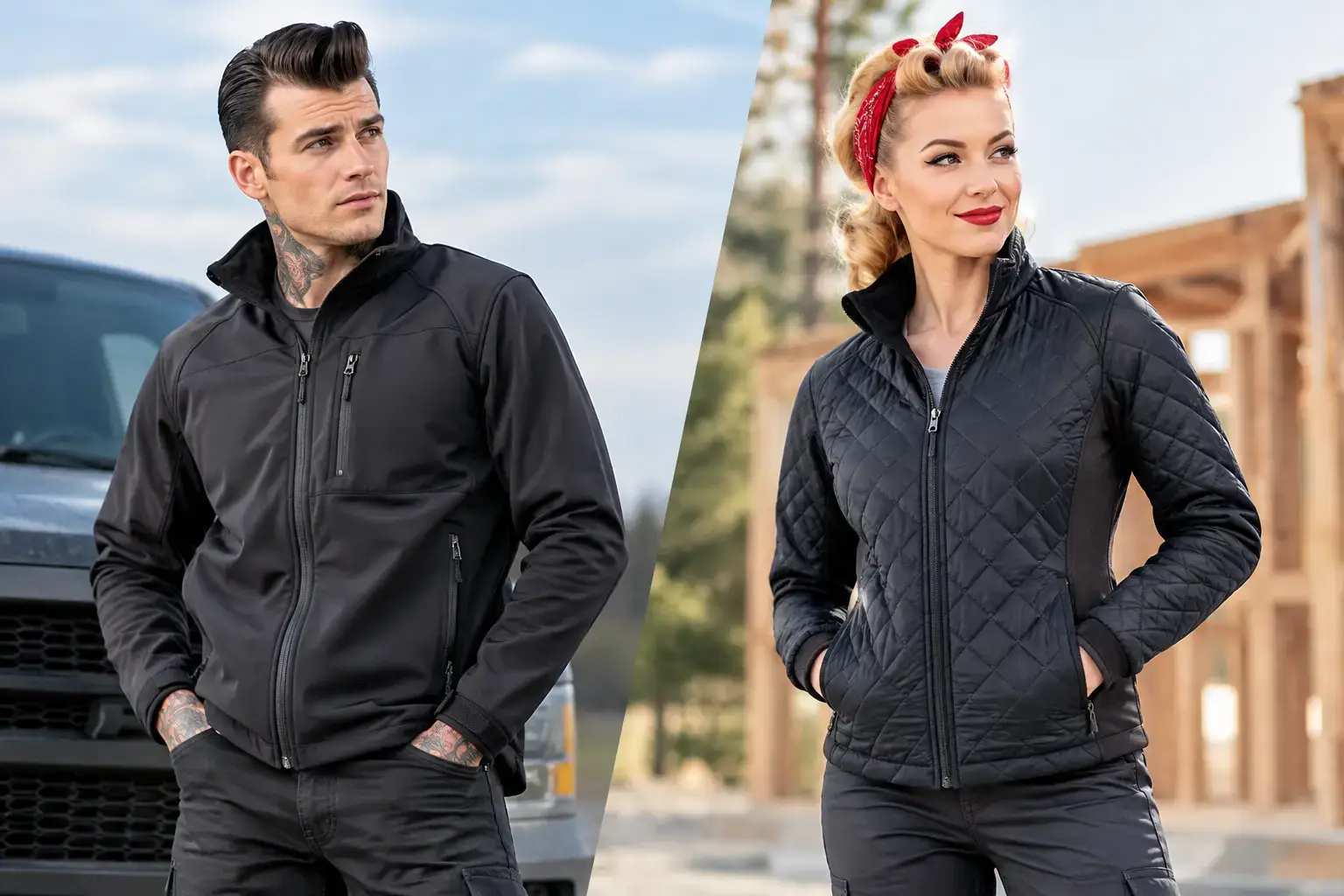
Compare softshell vs quilted workwear for weather, movement, layering, and daily wear. Choose the jacket or vest that fits your crew's actual conditions well.
A jacket that feels perfect in the parking lot can become a nuisance by 10 a.m. That is the real question behind softshell vs quilted workwear: not which style is better in theory, but which one supports the way your team actually moves, works, travels, and handles changing weather.
Both have a place in a premium team apparel program. Softshell offers a clean, flexible outer layer for active days and inconsistent conditions. Quilted pieces bring more warmth and a distinct, structured feel for colder routines. The right choice comes down to climate, activity level, layering habits, and how the garment will be worn between shifts, appointments, site visits, and everything else on the calendar.
Softshell vs Quilted Workwear: The Core Difference
Softshell jackets and vests are designed around mobility and weather resistance. Most use a smooth woven face, some stretch, and a breathable construction that blocks wind better than a basic sweatshirt. Depending on the garment, a softshell may also offer light rain protection. It is the practical middle ground for cool mornings, windy walks, and days that start cold but do not stay that way.
Quilted workwear is built around insulation. The outer shell contains stitched channels or panels filled with synthetic insulation, creating small pockets that hold warm air close to the body. It is not just a style detail. That construction gives quilted jackets and vests their warmth, loft, and recognizable texture.
Put simply, softshell manages conditions through flexibility and wind protection. Quilted apparel manages them through added insulation. If the day requires more motion than warmth, softshell often leads. If warmth is the non-negotiable, quilting earns its place.
Choose Softshell When Movement Drives the Day
A softshell is usually the stronger choice for teams that spend their day moving between indoors and outdoors. Think of people loading equipment, walking a campus, meeting clients at different locations, working events, or commuting through a chilly morning before spending the afternoon inside.
The fabric's stretch matters more than it may seem on a product page. Reaching, driving, lifting, bending, and wearing a backpack all feel easier in a jacket that has some give. A well-chosen softshell also tends to lie flatter against the body than a heavily insulated jacket, which helps when the wearer needs to layer it under another outer piece or keep it on in a heated space.
Softshell is also useful when weather is annoying rather than severe. A breeze, light drizzle, or damp cold can make a standard zip-up feel insufficient. A softshell adds a more capable outer barrier without turning the wearer into a walking space heater by noon.
That said, “weather resistant” is not the same as waterproof. For sustained rain, a dedicated rain shell is the better tool. Softshell is for the day that keeps threatening rain, not the day that has committed to it.
Where Softshell Can Fall Short
Softshell does not create warmth on its own. Its performance depends heavily on what is worn underneath. In a mild climate, that may be a long-sleeve shirt. In colder conditions, it may mean a base layer and insulating midlayer.
That layering flexibility is a benefit for some teams and an inconvenience for others. If your group wants one grab-and-go jacket for genuinely cold weather, softshell alone may feel underpowered. It also tends to be less forgiving for those who work primarily outdoors while standing still, where body heat is not being generated through movement.
Choose Quilted Pieces When Warmth Is the Priority
Quilted jackets and vests are the answer when cold weather is a regular part of the schedule, not an occasional surprise. The insulation creates immediate warmth, which makes these pieces appealing for early arrivals, outdoor check-ins, open-air events, warehouse environments, field work, and winter travel.
They also work well for teams whose members have different tolerances for cold. A jacket that is merely wind-resistant can be fine for one person and inadequate for another. Quilted insulation gives the garment a more dependable baseline of warmth before the wearer adds any layers.
A quilted vest deserves special attention here. It warms the core while leaving the arms unrestricted, making it a smart option for people who need dexterity or simply overheat in full sleeves. Worn over a sweatshirt, quarter-zip, or long-sleeve tee, it creates an adaptable cold-weather uniform without too much bulk.
Quilted jackets have a more substantial profile, which can make them feel particularly satisfying as a seasonal team piece. They are often the jacket people keep in the car, reach for during weekend errands, and wear long after the event or workday is over. That sustained wear matters when you are selecting apparel meant to represent a group with care.
Where Quilted Workwear Can Fall Short
Warmth has a cost: less breathability and more bulk. In active roles, a quilted jacket can become too warm quickly, especially when moving between cold exteriors and temperature-controlled interiors. The insulation that feels welcome at 7 a.m. may feel like overkill after the first busy hour.
Quilted garments can also be less flexible at the shoulders and elbows than stretch softshell. Construction varies by style, but the stitched insulation and lining naturally create more structure. That is not a defect. It simply means the garment is better suited to steady cold than constant physical activity.
Consider the Conditions Before the Color
Color, logo placement, and garment style all matter, but climate should make the first cut. A team in a coastal region with wind and fluctuating temperatures may get more use from softshell. A group working through a true winter, particularly during outdoor arrivals and departures, may be better served by quilted jackets or vests.
Ask what the wearer experiences during the coldest common part of the day. Not the rare weather emergency. Not the indoor thermostat setting. Think about the walk from the car, the outdoor assignment, the loading area, the early setup, or the commute home after sunset.
Then ask how much physical movement happens while the garment is on. The more active the role, the more valuable breathability and stretch become. The more stationary the role, the more valuable insulation becomes.
For teams spread across different regions, one jacket may not be the most practical answer. Offering a softshell option alongside a quilted vest or jacket can respect real differences in climate and comfort without making the program feel inconsistent.
How Layers Change the Decision
Layering is where softshell and quilted pieces stop being competitors and start becoming useful tools for different jobs. A softshell is typically an outer layer. It works best over a lighter insulating layer when temperatures drop. A quilted vest is often a mid-to-outer layer, depending on the weather. A quilted jacket is closer to a cold-weather outer layer from the start.
Consider what your team already wears underneath. If most people rely on hoodies or heavier knit layers, a softshell may fit naturally over that routine. If they prefer lighter tops and want one warm layer they can throw on immediately, a quilted piece may be more useful.
Avoid ordering based only on the warmest possible scenario. An overly warm jacket gets left on a chair. A versatile layer gets worn. The best team apparel is not the piece that wins a product comparison. It is the piece people reach for without thinking twice.
Custom Decoration Needs a Practical Look
For custom embroidery, fabric construction affects the finished result and the available placement areas. Softshell generally offers a smooth, stable surface for a left-chest design, name, department, or logo. Quilted garments can also be decorated effectively, but the stitched channels and insulation may limit placement choices or require a specific location to keep the design clean and secure.
This is one reason to choose the garment before finalizing artwork placement. A logo that sits beautifully on a smooth softshell chest may need a different position on a quilted jacket. It is a small production detail with a visible effect on the finished piece.
Think about the scale of the design as well. Clean, legible artwork tends to work best across both styles. A premium garment does not need an oversized mark fighting for attention. Precise customization, placed with intention, carries more weight.
The Better Choice Is the One Your Team Will Wear
Choose softshell for mobility, variable weather, and a lighter layer that works across much of the year. Choose quilted workwear for dependable warmth, colder routines, and a more insulated feel. If your team needs both, that is not indecision. It is a practical response to different roles, regions, and preferences.
A thoughtful apparel order starts with the conditions people face before the door opens and after the lights go down. Get that part right, and the jacket or vest becomes more than a seasonal handout. It becomes the layer they are glad they brought.
Next step
Pick a jacket and place your logo and name.